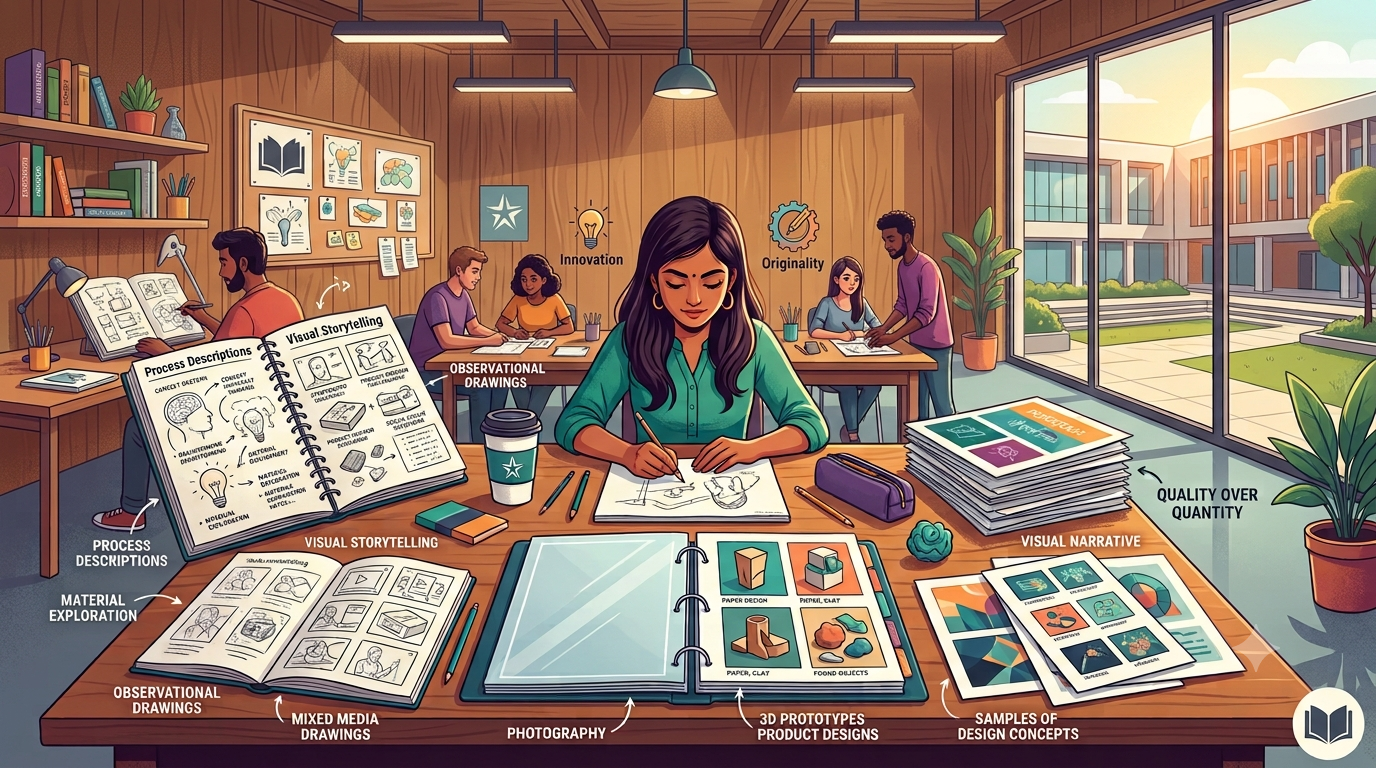
If you are wondering how to build an art portfolio for college admissions, you are not alone. Many students feel confused about where to begin and what to include. An art portfolio is not just a collection of artworks. It is a carefully curated student portfolio that reflects your creative skills, creative thinking, and ability to communicate ideas through visual storytelling.
In art college admissions, your art portfolio often carries more weight than academic grades. That is why understanding the portfolio-building process early can make a significant difference in college admissions outcomes.

Understand What Colleges Expect
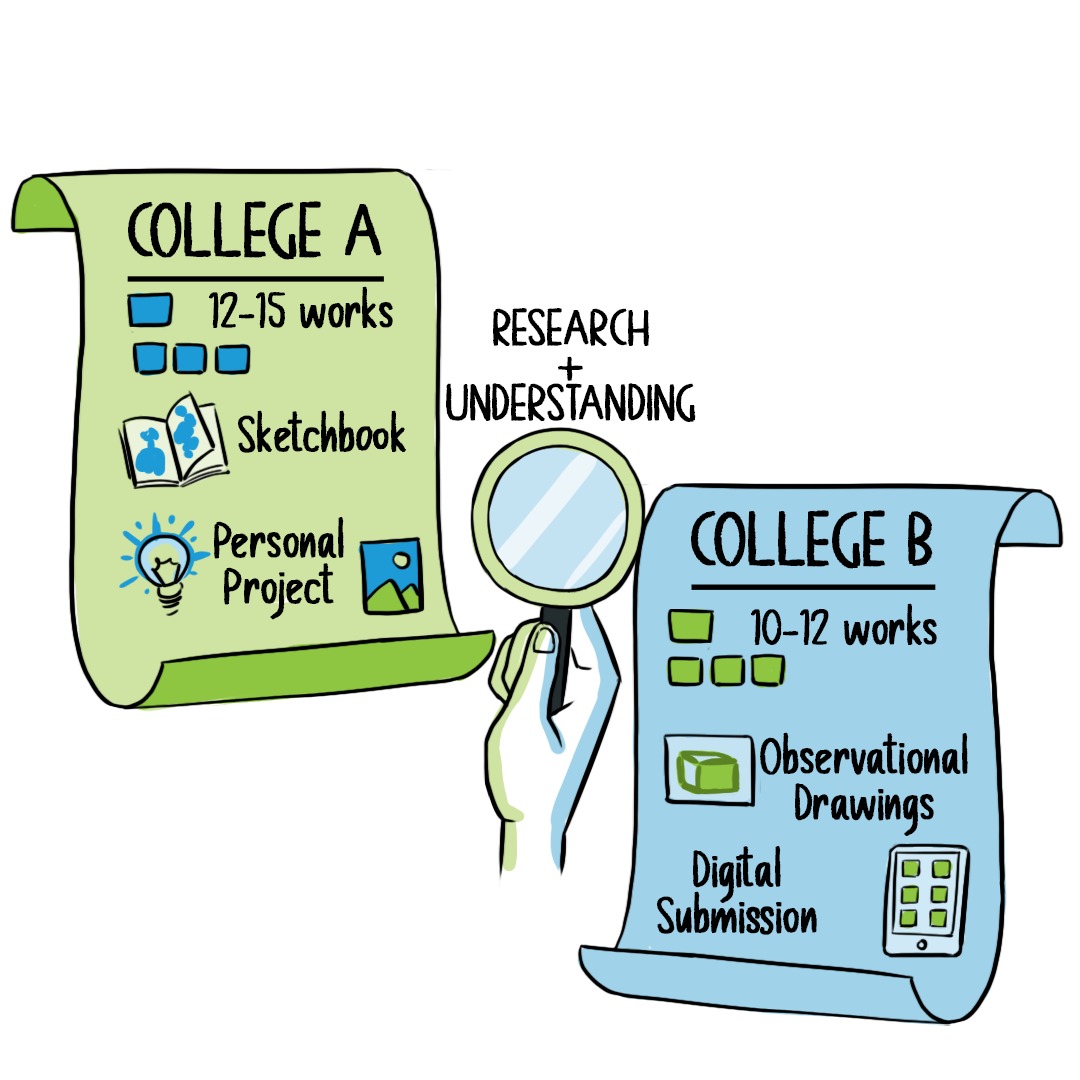
Before starting your portfolio preparation, research the specific art portfolio requirements of each institution. Every college has different expectations.
Most art portfolio requirements include:
-
-
-
-
-
-
- Observational drawings
- Concept-driven projects
- Sketchbook pages
- Process work
- A defined number of artworks
-
-
-
-
-
Understanding these guidelines helps you align your student art portfolio with what art college admissions teams are looking for.
Start with Strong Foundations
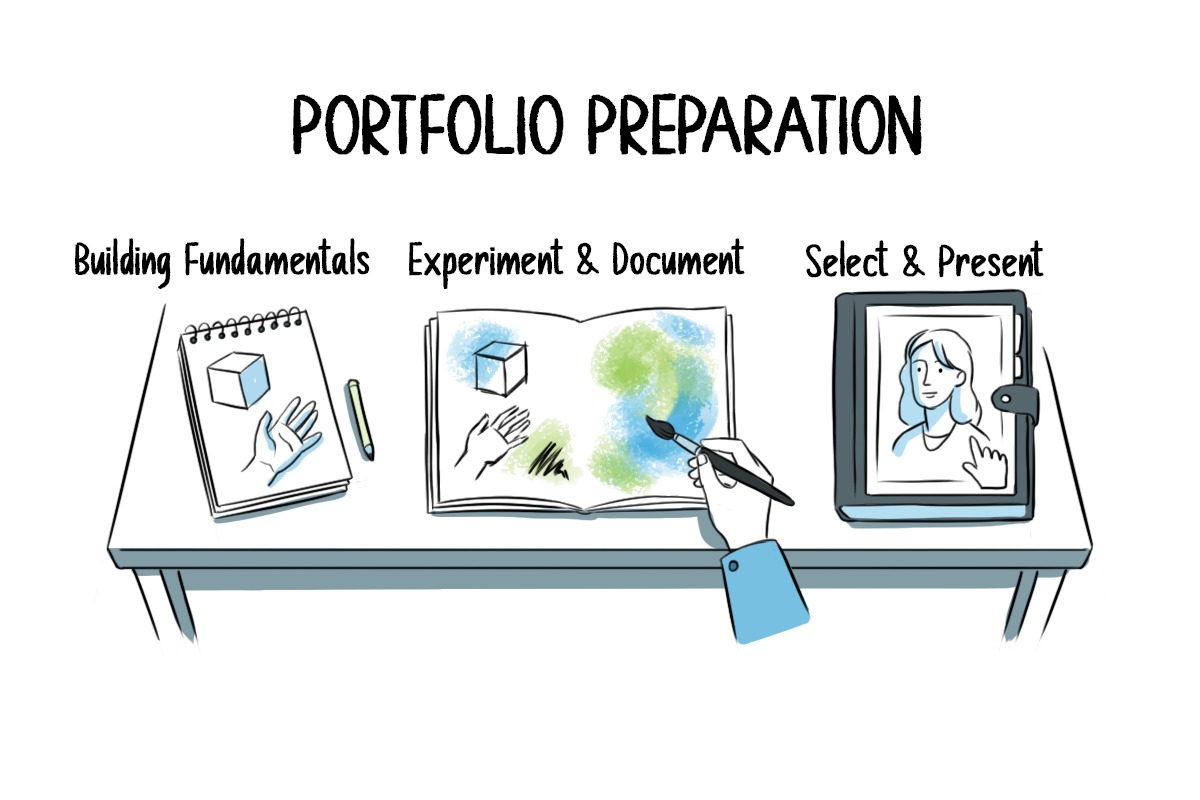
A strong art portfolio begins with fundamentals. Focus on drawing from observation, understanding composition, proportion, light, and color. These basics strengthen your creative skills and show discipline.
Colleges want to see technical ability combined with creative thinking. Building foundational skills ensures your portfolio preparation for art college is rooted in quality.
Develop Personal Projects with Concept
Learning how to build an art portfolio also means developing projects that reflect your personality. Personal projects demonstrate originality and visual storytelling.
Choose themes that connect to your interests or experiences. Explore ideas deeply instead of creating random pieces. Colleges value authenticity in a student portfolio because it reflects maturity and individuality.
Document Your Process Clearly
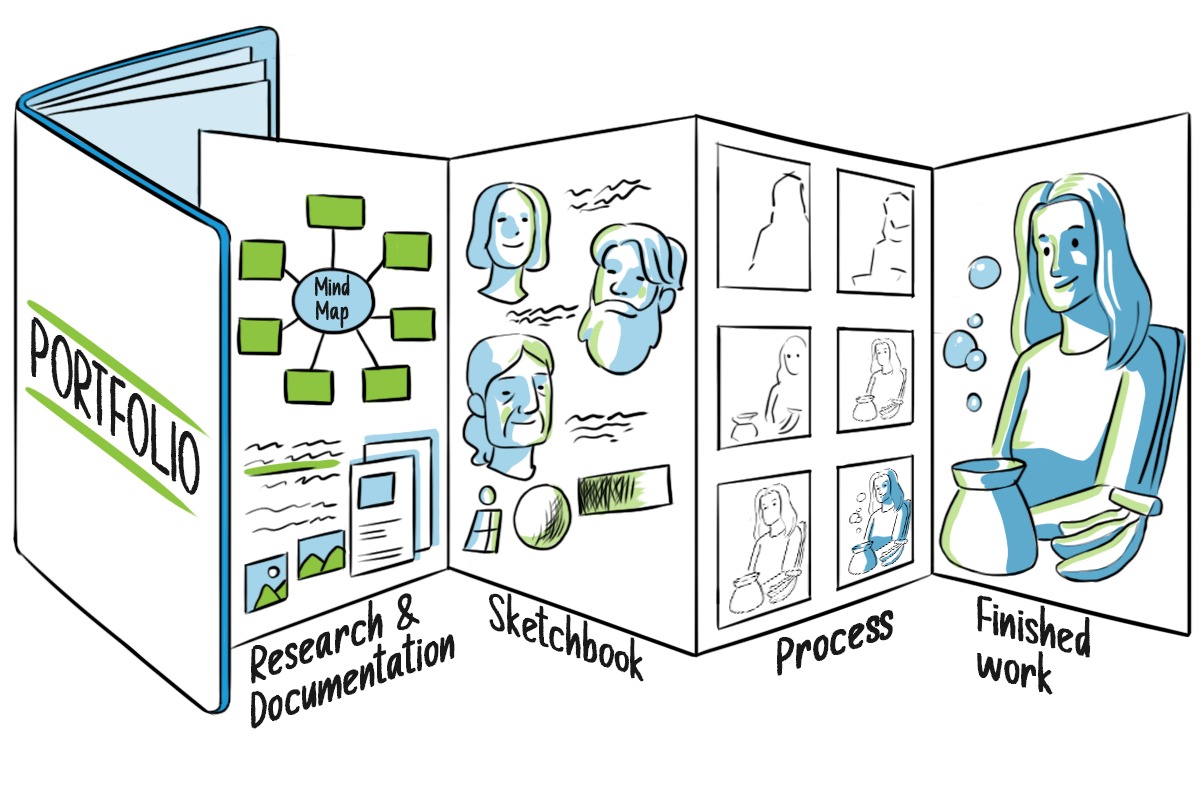
An impressive student art portfolio includes more than final outcomes. It shows the portfolio building process.
Include:
- Initial sketches
- Research and references
- Iterations and experiments
- Refinements and final outcomes
This demonstrates creative thinking and problem-solving. Admissions panels want to see how you arrive at your ideas, not just the finished result.
Select and Refine Your Best Work
One of the most important steps in how to build an art portfolio is careful selection. Do not include everything you create. Choose pieces that show growth, versatility, and depth.
Edit your work critically. Seek feedback from mentors or professionals. A strong art portfolio for college admission focuses on quality over quantity.
Avoid Common Art Portfolio Mistakes
Understanding art portfolio mistakes can improve your chances significantly.
Common mistakes include:
- Including too many weak pieces
- Ignoring process work
- Submitting low-quality images
- Disorganized layout
- Copying trending styles without personal input
Avoiding these art portfolio mistakes strengthens your overall portfolio preparation and reflects professionalism.
Present Your Student Art Portfolio Professionally
Today, most colleges prefer digital submissions. Present your art portfolio in a clean, structured, and professional format.
Ensure:
- High-resolution images
- Logical sequencing of projects
- Clear project descriptions
- Consistent formatting
A well presented student portfolio enhances visual storytelling and leaves a strong impression during college admissions review.
Conclusion
Understanding how to build an art portfolio is about more than assembling artworks. It is a strategic portfolio building process that combines technical skill, creative thinking, and thoughtful presentation.
From researching art portfolio requirements to refining your strongest pieces, every step contributes to a compelling art portfolio for college admission. Learn from art portfolio examples, avoid common art portfolio mistakes, and focus on authentic visual storytelling.
Your art portfolio represents your growth, dedication, and potential. Build it with intention, and it can become the key to successful art college admissions.